
Photo manipulation has occurred for decades, its nothing new or uncommon, but as technology progresses so do ways that photos and videos can be manipulated. The issue with this is that certain information, people, places, and events should not be manipulated. When it comes to journalism for example, reporters should report on facts when publishing the news to keep the integrity of the source, the story, and the journalists reporting on the story. “One of the most disturbing findings was that more than half of the news photographers who replied said they sometimes staged photos — with 12 percent saying they did so at least half the time. All of the major wire services and newspapers in the United States forbid staging news photos”. (The New York Times)

Photo manipulation isn’t always bad but when the intent is to be deceitful, that becomes a problem especially when its used as a propaganda tool, or as mentioned before to report false news or base public opinion on an altered photo, video or other visual media. There are some photo manipulation techniques however, that are used to enhance a photo, be it color balance, sharpness, etc. These techniques are not used to alter the image itself but to either brighten or correct the color, or clarity of an image and or video. “The most widely used digital camera in the photojournalism industry as of the commencement of this paper, the Nikon D1, is well known for a few technical flaws, one of which is an ugly yellow haze that covers every image it records. No matter what camera lighting settings are adjusted for the various basic lighting scenarios (daylight, outdoor-cloudy, fluorescent, incandescent, tungsten, etc), the images always appear with this yellow scum – this scum, according to the naked eye, does not exist in reality and therefore must be removed”. (Aaron Quinn, Edward Spence)
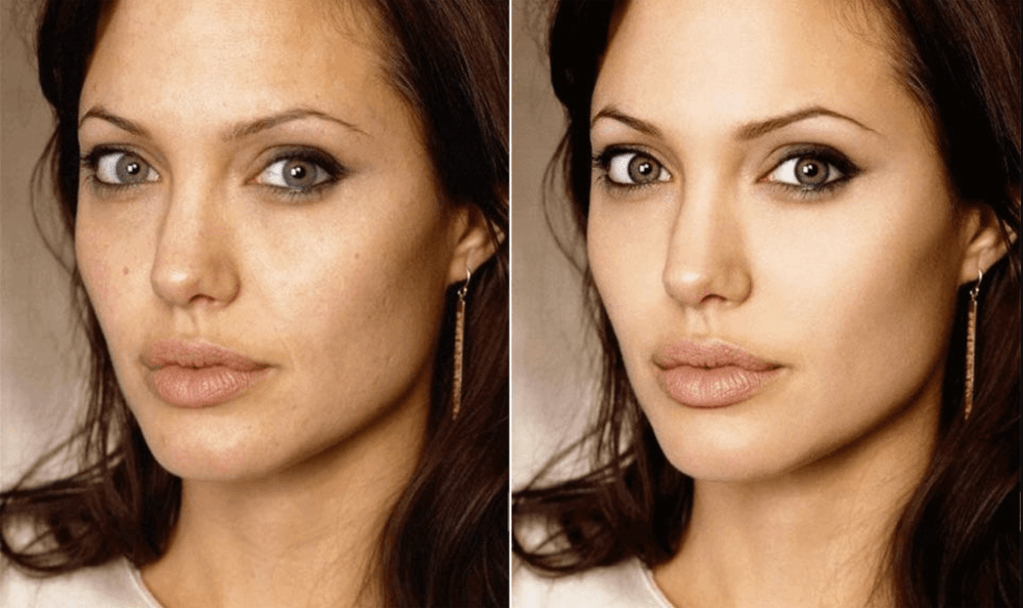
So when it comes to photo manipulation it is an ethical and moral question rather than a blanket statement that must be addressed when it comes to intent. If the intent is to deceive, to manipulate, to sway people’s opinions based on a lie, then photo manipulation or the manipulation of any visual media is a deadly sin when it comes to visual storytelling. “Truth has always been malleable and subjective, only more so today where visual media lends itself entirely to manipulation and falsification. In looking at an image today we are left wondering: What is it? Can it be trusted? What exactly is it telling us? We are analogously asking the same questions of our government and media institutions, which seem to be devolving symbiotically from what we’ve come to know and rely on. Truth is being questioned on every front”. (Nancy Richards Farese)
Resources
The New York Times. (2015, October 16). Staging, manipulation and truth in photography. The New York Times. Retrieved October 11, 2021, from https://lens.blogs.nytimes.com/2015/10/16/staging-manipulation-ethics-photos/.
Quinn, A., & Spence, E. (2004, July). Manipulation in Photojournalism. Is it Ethical is it Corrupt? by Aaron Quinn and Edward Spence. Sydney; ANZCA04 Conference.
CNET News staff. (n.d.). Pictures that lie (photos). CNET. Retrieved October 11, 2021, from https://www.cnet.com/pictures/pictures-that-lie-photos/.
Farese @NFaresePhoto, N. R., & Farese, N. R. (2021, April 27). Rethinking how we see and understand news – and who frames it. Nieman Storyboard. Retrieved October 11, 2021, from https://niemanstoryboard.org/stories/reframing-how-we-see-and-understand-news/.

 Design By Angel Vazquez