
During the duration of the principles of experience design course, I have learned a lot about ideation and its use in my field. As a full time UX designer, methodologies and workflows change from place to place. I work in a fast-paced environment and as such, the ideation phase of design sometimes takes a toll. It was refreshing to learn about all the different ideation techniques, understanding user psychology and learning to empathize with them and see users as part of the whole design; symbiotic to the product itself. The course has opened my eyes to evolving design through design thinking, understanding that we live in a digital age where static design has basically become obsolete in digital product design, and how every single detail has intention and thought put into it with the user always in mind. Here is a summary of all the modules this course has offered:
Module 1: Design thinking

This module was a great introduction into this course. Design thinking is a logical step forward in design, especially now that digital products are not updated through new releases as they were done in the past, they are now consistently updated to allow greater ease of use with every new iteration for the end users. During this module I worked with a partner to redesign the gift giving experience, and use design thinking to create my own version of it. I also wrote a blog post of my ideas of design thinking.
Module 2: User Psychology

As I started this module, I thought it would focus more on the users we design for, but it ended up being a more introspective approach to design by having us (the students) pick 2 websites we like and dislike with the goal of analyzing why we feel how we feel about them at deeper than surface level or face value.. What functionalities we appreciate, aesthetics, and asking ourselves why for each talking point. We analyzed the websites for the main project and had a deeper understanding of our likes and dislikes, how that relates to end users for any digital product, and understanding that design in this field should always be user centered and that as users ourselves, we can empathize with our user bases through understanding our own thought patterns when it comes to our feelings towards a finished digital product.
Module 3: User Empathy

Understanding users is key to being able to design in a field called “User experience” or human computer interface (HCI). As designers we should be able to empathize with users not only at a basic level when designing a new product, but also throughout the support life and updates that modern software has to continue refining the product for end users based on their feedback and needs of both the business and the users.
Module 4: User Personas

User personas are an interesting method created to better understand the user/consumer base that uses your product. It offers valuable information that is not only relevant to UX Designers, but development, product owners, marketing, and the executive teams. While the Avatars created are not real people, they are based on data and research made on real life users. It lists their everything from their demographics to their economic positions, careers, hobbies, etc. If there is any data that can be cross referenced with other personas, it is a good sign that you are on track with creating user personas that closely resemble actual users of your product.
Module 5: Problem statements



This lesson took a deep dive into how users interact with a product and how they feel about a product’s functionality. With the app point of view assignment, we looked at three different apps and their reviews in their perspective app stores (apple/google) and condensed them down to positive, negative, and suggestive comments. By doing this, problem statements were able to be formed, while also gauging the general feeling of either contentment or disapproval by the people who use these apps. In the problem statements assignment, using similar methods based on previous data from an older assignment, I created problem statements that addressed the most pressing issues relating to the company that assignment was based on.
Module 6: Ideation
This module was a combination of everything we have learned so far in this course, plus a bit of research into other ideation techniques that UX designers have adopted over the years. Everything from brainstorming, design thinking, journey maps, wireframing, sketching, etc. was addressed with their perspective strengths in different situations where they would be needed. I really enjoyed this module as it felt like a culmination of everything learned so far.
Module 7: User Journey mapping
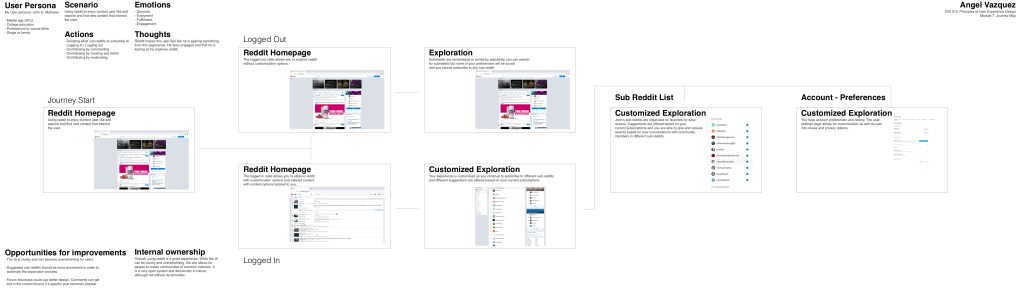
An important part of user experience design is creating the user flow or journey. Every detail of the product is thought of including how a user can navigate it, the differing user state paths such as logged in/ logged out, and the overall experience users will have when using the app/website/product.
This course has been a very interesting experience and a deep dive into the creative process of user experience design. While it mostly covered the ideation, and beginning phases of UX design, it was an essential experience in understanding not only the thought processes required for this kind of job, but ways that those thoughts can be translated into tangible designs and ultimately products. I thoroughly enjoyed this course and will refer back to what I have learned when creating new products.

 Design By Angel Vazquez